


If there is one thing life has taught me, it is that emergencies never give us a warning. They come uninvited. One moment, everything feels normal, and the next, you are either running for safety, trying to help someone else, or struggling to get someone to help you. I have lived in Nigeria long enough to see accidents on the road, robberies in broad daylight, people slumping without anyone being able to identify them, and even cases where victims are rushed to the hospital with no way to contact their families. These real-life situations planted a seed in me, the idea of creating a tool that could bridge the gap between the person in distress and those who love them. That seed grew into what today we call the Kaci Emergency Feature.
This is not just an app feature. It is a lifeline. And I built it because I know what it feels like when seconds count, and no one has the right information to act.
But I also understood something else: in some emergencies, users might not even be able to use their phones to call or identify themselves. That is one of the reasons why I added TravelSafe in the app. TravelSafe allows users to set their travel details before a journey. If a user does not check out at the particular time they indicated, the system automatically triggers notifications to their Guardians. It is a way to make sure someone knows where you are, even if you cannot speak for yourself. You can click here to read more about TravelSafe in another article.
For emergencies where a user is able to type and place a request, we designed Kaci to be as simple and fast as possible. You can follow along in this article as I explain how the emergency request system works, why I chose a Guardians-first model after my meetings with the Nigerian Police, NSA, and DSS, and how we are positioning Kaci not as a security provider but as a connector, linking people to the help that already exists.
Because at the end of the day, every second matters. And if Kaci can reduce delays and help solve even 1% of the cases that would otherwise have been lost to time, then it is worth every line of code.
How the Emergency Feature Works
When a new user signs up on Kaci, they use their active phone number and verify via WhatsApp, SMS, or Email. After that, they complete their profile page, upload a picture, and most importantly, add at least two trusted Guardians. These guardians can be family, close friends, or anyone the user trusts with their life. Each guardian’s name, phone number, and email are required.
Once this setup is complete, the system generates a unique Kaci Security Number (KSN) for the user. This number is critical because it acts as a quick reference during emergencies.
I will advise users to write their KSN somewhere outside their phone, maybe in a wallet, on a wristband, or somewhere rescuers can easily find it.
When an emergency happens, here’s how the process unfolds:
-
The user clicks the Emergency button on the home page of the app.
-
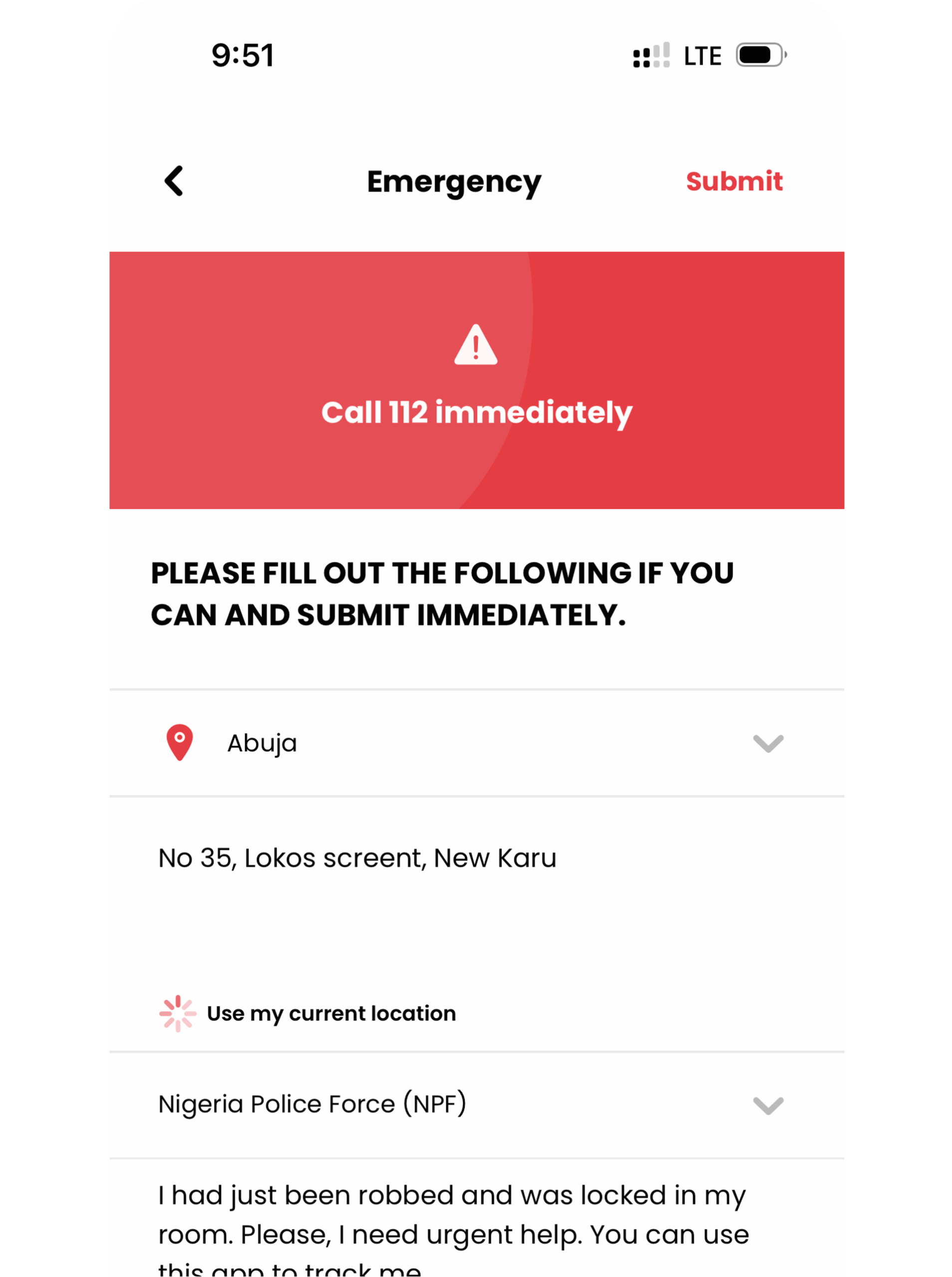
A single page pops up where the user fills in key details:
-
Location (can be auto-detected via Google Maps).
-
Address of the incident.
-
Target agency (police, fire, health, etc.).
-
Comment or description of what is happening (optional).
-
Voice recording if speaking is faster or safer than typing.
-
Media upload for photos, videos, or files.
-
-
The user hits Submit and waits for a confirmation popup.
Once confirmed, the guardians receive a “Help is Needed” notification instantly via WhatsApp, SMS, and Email, along with a link that contains all the details the user provided, including their KSN and profile picture.
The beauty of this system is that guardians don’t even need to be on Kaci to receive the alert. This makes it universal and accessible.
Real-Life Scenarios Where It Matters
I designed the Emergency feature to be broad, covering different possible crises:
-
Road Accidents: Victims are often unconscious or unable to speak. Guardians get notified immediately and can act.
-
Robberies: A quick tap can alert loved ones with live location and details.
-
Medical Emergencies: For example, someone collapses due to an illness like asthma, diabetes, or even malaria complications.
-
Missing Persons: If someone feels unsafe or suspects they might be in danger, they can raise an alert before things escalate.
-
Disasters: Fires, building collapses, floods, and other situations where communication lines may be cut.
Each case has one common thread, time is critical. And the Kaci Emergency feature is designed to cut down the time wasted in trying to identify or trace a victim.
Meetings With Security Agencies
In 2024, I had the opportunity to present Kaci to some of Nigeria’s most important security institutions. I wrote a partnership letter to the Inspector General of Police, and that led to a meeting with the Police ICT team at the Force Headquarters in Abuja.
When we tested the feature live, they were impressed. The only question that kept coming up was, “How will this make money for us?” I wasn’t shocked. I understand the realities, they want to help, but often, they lack fuel, vehicles, or resources to act quickly.
We also met with the National Security Adviser’s team and the Department of State Services (DSS). Just like the police, they were overwhelmed by the potential of Kaci. They promised to get back to us, but as you can guess, bureaucracy has its way of slowing things down. We never heard from them again.
These experiences shaped my strategy. Instead of depending fully on state institutions, I shifted focus to something smaller but more effective, users and their guardians first.
Why Guardians Come First
I realized that if we built Kaci around the police or security agencies, we might disappoint users when authorities fail to respond quickly. Nigerians know this reality too well. Sometimes, you call for help, and the police genuinely want to assist but cannot because they don’t have fuel or the logistics to mobilize.
So, the pivot was simple but powerful: make sure that in every emergency, your guardians are the first to know. They are the ones who care the most, and with the information Kaci sends, they can then involve the authorities.
This is why our disclaimer is very clear:
Kaci is not a professional emergency service. It does not provide security, medical, or crisis services. It only connects you to your guardians and partners. If you need direct help, contact emergency services near you.
Conclusion
The Emergency feature on Kaci is not perfect, and I know that. But if it can help solve even one percent of crime or emergency cases, it will have achieved its purpose. Sometimes, one small piece of information is all it takes to save a life or crack a case.
My dream is that families will no longer live in prolonged fear of not knowing what happened to their loved ones in times of crisis. That every Nigerian, African, and eventually global citizen will have a simple tool that connects them to their guardians when seconds count.
When I think about why I built this, I always go back to one thing: human dignity. Nobody deserves to be lost without a trace. Nobody deserves to die nameless on a hospital bed. Nobody deserves to be a “missing person” poster when there could have been a way to notify loved ones instantly.
Kaci is my small contribution toward making sure that when emergencies happen, people are not alone. The Emergency feature is the lifeline I wish had existed years ago. Today, it exists. And I am committed to improving it, spreading it, and ensuring that more lives are saved.