


When I look at the challenges we face daily in Nigeria and across Africa, one thing that stands out is how difficult it is for ordinary citizens to get access to the right information at the right time. Whether it is finding an emergency number, getting help from a government agency, contacting a helpline in a moment of crisis, or simply staying updated about events happening in your community, information is often scattered, inaccessible, or outdated.
This challenge is not a small one. I have seen situations where people needed urgent help but didn’t know which number to call. A victim of domestic violence once told me she spent over an hour searching online for a verified helpline. Parents have confessed that they didn’t know there was a 24-hour child helpline available for free. Men and women struggling with mental health issues often have no idea that support lines exist. Beyond that, government press releases, traffic updates, weather warnings, and even robbery alerts hardly get to citizens fast enough, if at all.
This gap in access inspired me to design one of the first features on the Kaci Help App, connecting citizens with Organizations, Government & MDAs, and giving them direct access to InfoBank and Alerts. My vision was simple yet powerful: to put vital information and connections within everyone’s reach, while equipping governments, agencies, and organizations with the data they need to serve citizens more effectively.
Why Information Access Matters
In our society, information is power. It is the difference between life and death in emergencies, between confusion and clarity in moments of uncertainty, and between isolation and support for those struggling in silence.
Take for example a fire outbreak. If you don’t have the fire service number saved on your phone, you could waste precious minutes trying to find it online, or worse, calling the wrong number. For someone being harassed or assaulted, knowing that there’s a dedicated sexual assault helpline available could mean the difference between continued suffering and timely rescue.
Governments and MDAs (Ministries, Departments, and Agencies) also struggle with bridging this gap. They often release critical information, but it doesn’t always get to the grassroots. Citizens, on the other hand, feel cut off, as if the government is too far away to listen or respond.
Kaci Help’s InfoBank and Alerts feature was built to change this narrative.
Getting Started on Kaci Help
The first step for any user is to sign up with their active phone number. We ensure verification through WhatsApp, SMS, or Email for authenticity. Once inside, users can head to their Profile Page, edit their details, and complete their setup.
From there, the experience opens up into a hub of resources.
The Alerts and Information Flow
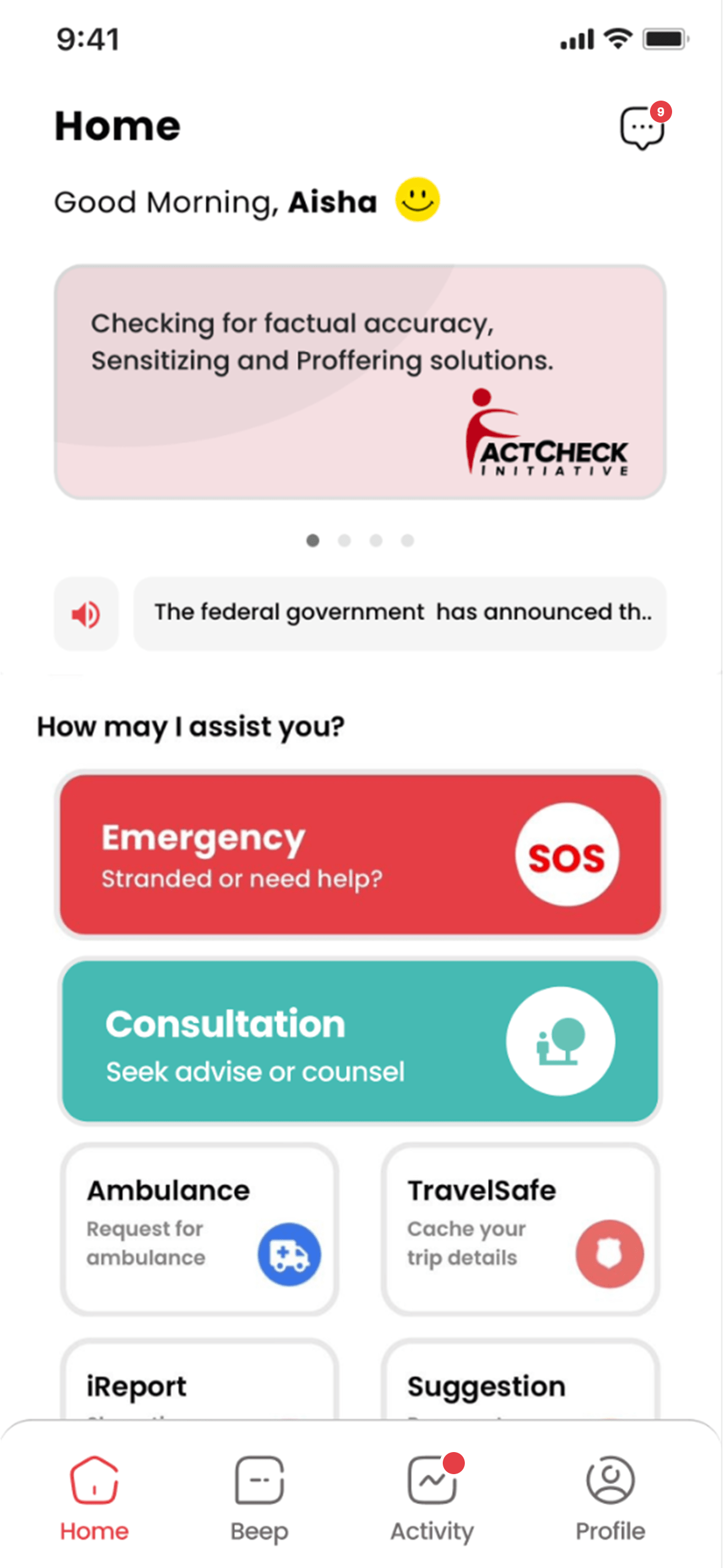
On the Homepage of the Kaci Help App, I designed multiple ways for people to stay informed:
-
Message Icon: This is where users can click to view messages, newsletters, press releases, and alerts. Imagine waking up and seeing important updates like a robbery happening in your area, heavy traffic advisories, weather forecasts, or emergency safety warnings. All of this is location-based, meaning the updates are relevant to the country of residence you selected during registration.
-
Image Slider: These sliders feature important information curated by us, the Kaci Help admin team. Each slider may link to an external website for users who want to learn more. Again, this is tailored by country of residence, so that what a user in Nigeria sees is different from someone in Ghana or Kenya.
-
Alerts Scroll: This is a scrolling text banner of urgent updates. To make this accessible to everyone, we added a speaker icon. With one click, our automated assistant reads the information aloud, helping those who may not be able to read at the moment or those with disabilities.
All of these layers were created to ensure that information reaches the user quickly, clearly, and in formats they can engage with.
InfoBank: Your Pocket Directory of Help
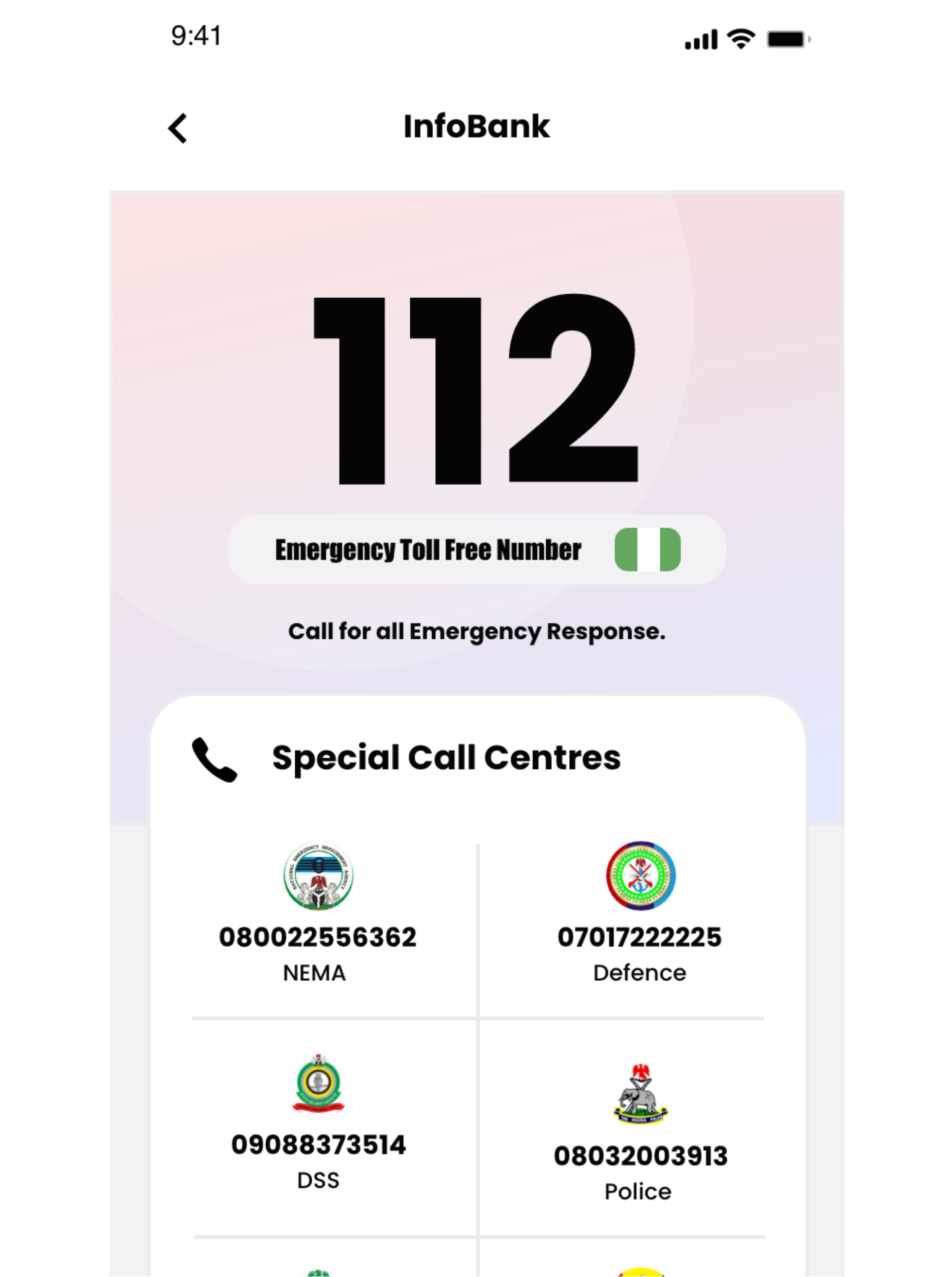
This is the heart of the feature. When you click on the InfoBank button on the homepage, it opens up an organized collection of emergency and support contacts.
-
Emergency Number of Your Country: For instance, in Nigeria, you immediately see 112, and you can click to dial instantly. This number also appears on all request pages across the Kaci Help App to make sure it’s always within reach.
-
Special Call Centers: These are direct lines to government security or emergency agencies. In Nigeria, for example, you’ll find the Police, FRSC (Federal Road Safety Corps), NEMA (National Emergency Management Agency), Fire Service, DSS (Department of State Services), and more.
-
General Help Book: This section opens up a broader collection of government, private, and public organization contacts. Think of it as your digital help directory. From helplines for sexual assault survivors, child protection lines, mental health support numbers, to men and women’s support helplines, everything is listed here in an accessible format.
The InfoBank adjusts based on your country of residence, so users only see what is relevant to them.
Organizations, Government & MDAs
Another aspect of this feature is how organizations and agencies appear in request flows. When a user makes a request, whether for help, reporting an issue, or logging an emergency, these organizations appear as Target Agencies based on the user’s location.
Here’s where honesty is important: as of now, we don’t have partnerships with most of these agencies. This means we can’t guarantee response on their behalf. But what we can do, and are already doing, is analyzing the data collected from user requests.
This data gives governments and organizations valuable insights into the challenges people are facing. It helps them make data-driven decisions, identify weak points in their response systems, and improve strategic planning. For emergencies, the app ensures that the user’s guardians (the trusted contacts they selected) also get the shared information, creating another layer of safety.
Real-Life Scenarios
To make this clearer, let me paint a few possible situations:
-
Case 1: Fire Outbreak
A family in Abuja notices smoke spreading quickly in their building. Instead of panicking, they open Kaci Help, click the InfoBank, and immediately dial the fire service. At the same time, their guardians are notified that they’ve made an emergency call. -
Case 2: Robbery Alert
Residents in a neighborhood receive an alert on the app about an ongoing robbery nearby. The scrolling text is read out loud through the speaker feature for those who can’t look at their phones. People take precautionary steps immediately. -
Case 3: Child Helpline
A young boy being abused finally finds the courage to call the 24-hour child helpline he discovered in the Kaci Help InfoBank. He gets connected to professionals who intervene. -
Case 4: Data for Government
Over a month, Kaci Help collects multiple requests from users in Lagos reporting the same unsafe intersection. That data is compiled and shared with the relevant MDA, prompting them to deploy officers and fix traffic signals.
These are just a few scenarios, but they highlight how important it is to close the information gap.
Why I Built This Feature and Looking Ahead
I often reflect on my journey with Kaci Help. Building this app has drained me in many ways, mentally, physically, and financially. I can’t even remember the last time I took a proper break. But when I think about the people who will benefit, the child in danger, the woman seeking help, the man struggling in silence, or even the ordinary citizen needing to reach an emergency service, I know it’s worth it.
This feature is my personal response to a problem I’ve seen my whole life: the lack of accessible, reliable, and actionable information.
My hope is that over time, we will secure stronger partnerships with government agencies, MDAs, and private organizations. This will allow responses to be more direct and impactful. But even as it stands today, the Organizations, Government & MDAs, InfoBank and Alerts feature on Kaci Help is already bridging a critical gap.
It is giving people a centralized, trusted source for emergency contacts and updates. It is creating a way for governments to see what is happening on the ground through data. And most importantly, it is empowering citizens to act quickly, safely, and with confidence when it matters most.
Conclusion
In a world where misinformation spreads faster than truth and access to official help is often unclear, I believe this feature is a lifeline. Kaci Help is more than an app, it is a companion, a safety net, and a bridge between citizens and the institutions meant to serve them.
When emergencies strike, when people need answers, when the government wants to understand its citizens better, Kaci Help is there. And through the InfoBank and Alerts feature, I hope to make sure no one is ever left asking, “Who do I call?” or “Where can I find help?” again.